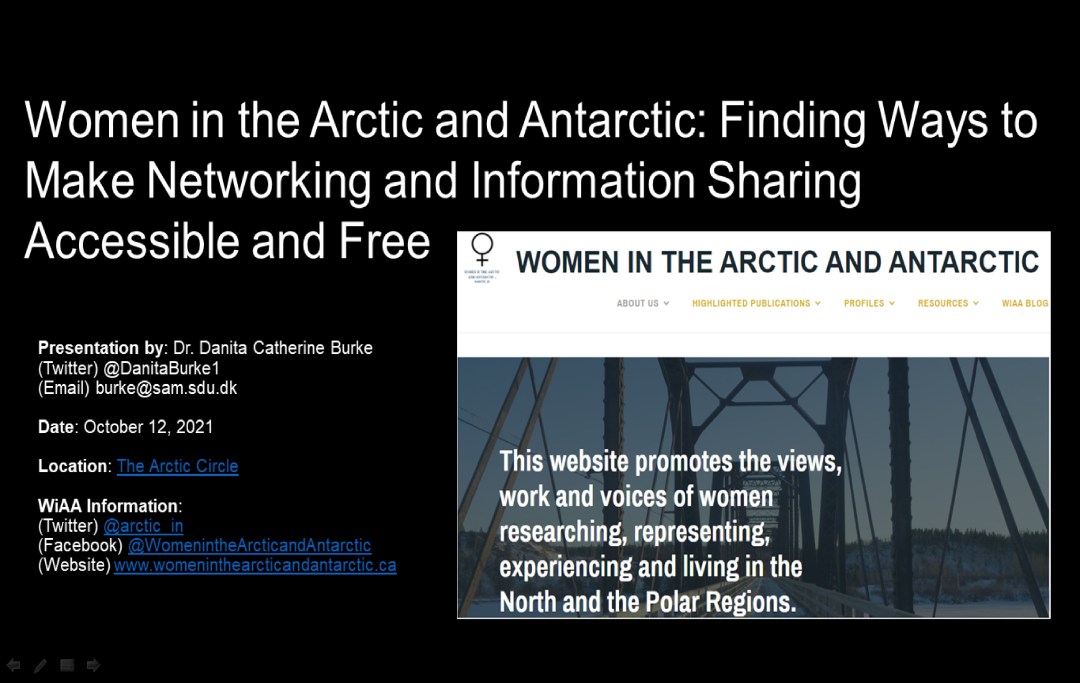
[Originally published on The Arctic Circle website to promote the upcoming talk by Dr. Danita Catherine Burke on October 12th, 2021 on the establishment of the Women in the Arctic and Antarctic] 550th Meeting - The Arctic Circle 12 October 2021 Danita Catherine BurkeWOMEN IN THE ARCTIC AND ANTARCTIC: FINDING WAYS TO MAKE NETWORKING AND INFORMATION-SHARING … Continue reading Women in the Arctic and Antarctic: Finding Ways to Make Networking and Information Sharing Accessible and Free
WiAA Blog

Victoria Heinrich
Victoria Heinrich's work includes as a weather observer in Antarctica completing year-long winter deployments to the Australian Antarctic & sub-Antarctic stations of Casey, Davis, Mawson, and Macquarie Island.
Share this:

Sanne Mariël Moedt
I am an ecologist with a PhD in Biology from the University of Copenhagen. Since 2017, I have conducted extensive field-based research in Svalbard and Greenland, focusing on exploring aquatic ecosystems in the Arctic and their response to environmental change. My work includes investigating primary producers—phytoplankton and other microalgae—and their roles within aquatic ecosystems. Using … Continue reading Sanne Mariël Moedt
Share this:

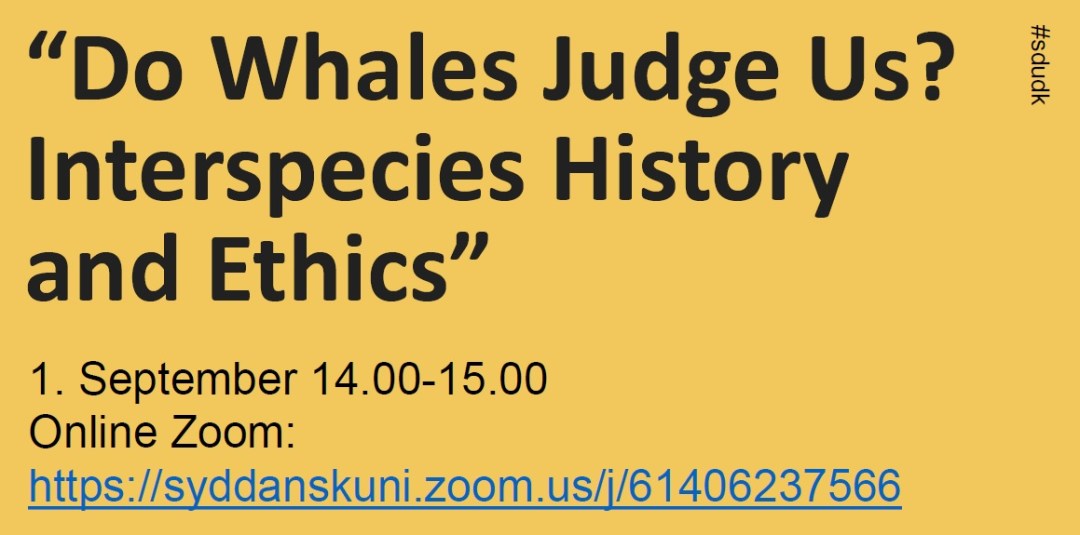
Dr. Bathsheba Demuth presents on “Do Whales Judge Us? Interspecies History and Ethics” at DIAS, University of Southern Denmark
University of Southern Denmark’s Danish Institute of Advanced Studies (DIAS) is hosting Dr. Bathsheba Demuth as part of their Opening Reception for CONNECTIONS exhibition. Dr. Demuth is an northern environmental historian and author and her talk titled “Do Whales Judge Us? Interspecies History and Ethics” is on September 1st, 2021 (14.00-15.00 GMT +2). Entrance to … Continue reading Dr. Bathsheba Demuth presents on “Do Whales Judge Us? Interspecies History and Ethics” at DIAS, University of Southern Denmark
Share this:

Nastasia Freyria
I am a PhD student in Oceanography, specifically environmental biology at Laval University, Québec. I study the adaptive responses of Arctic microbial phytoplankton communities in the North Water and how environmental factors impact these communities. The most efficient way to understand how organisms are adapted is to have a sound knowledge of genetic capacity of … Continue reading Nastasia Freyria

 Women in the Arctic and Antarctic